


South Asia
Languages
India
Pakistan
Bangladesh
Nepal
Sri Lanka
Literature
South Asia is a region which encompasses the following countries in which English plays a role in public life: India, Pakistan, Bangladesh, Nepal, Bhutan, Sri Lanka and the Maldives. The term ‘South Asia’ is used for what was formerly called ‘The Indian Subcontinent’.
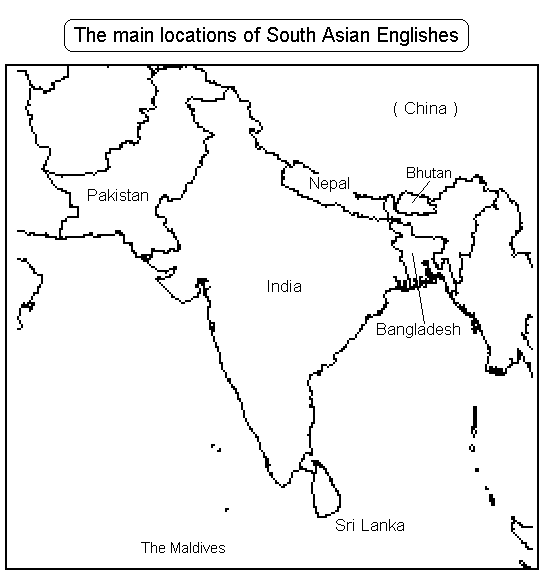
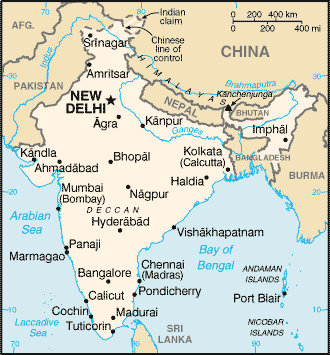
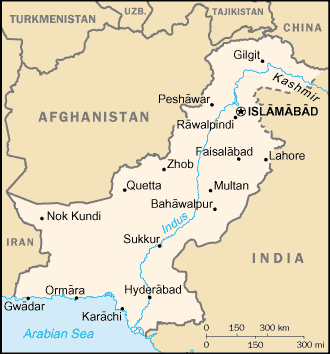
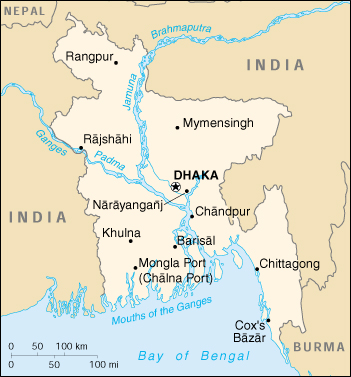
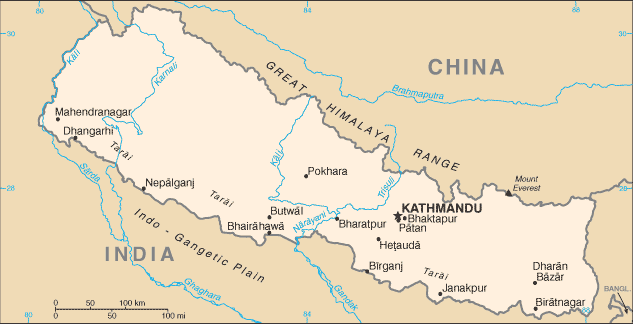
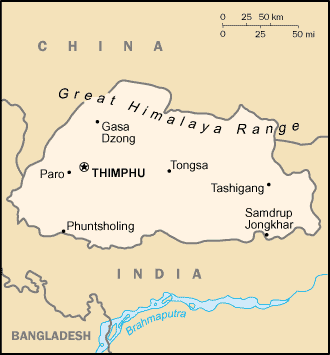
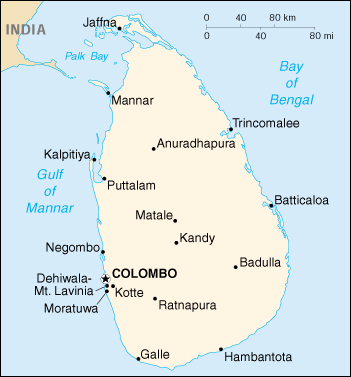
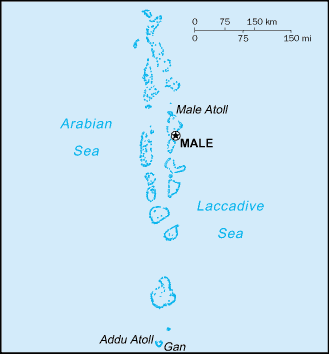
Languages of South Asia
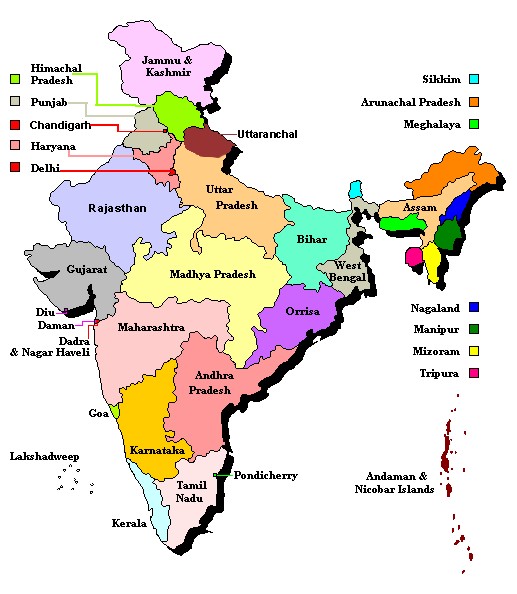
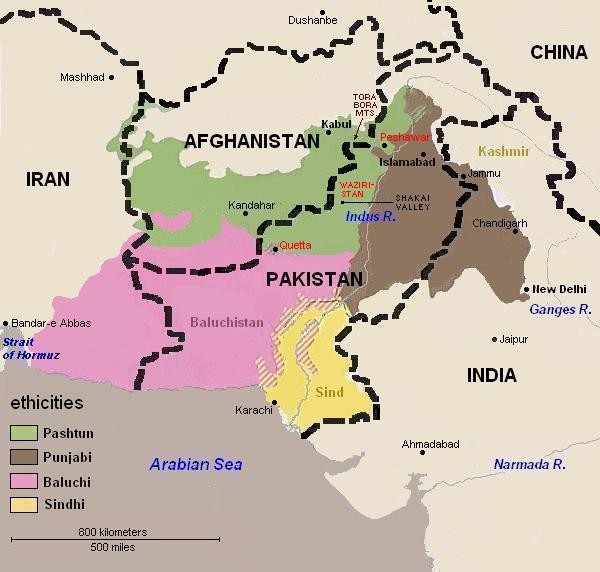
South Asia is linguistically quite heterogeneous. Over 70% of the languages spoken in India are Indo-Aryan, i.e. of Indo-European origin, deriving ultimately from Sanskrit, the classical language of India on a par with Greek or Latin in Europe. About a quarter of languages are Dravidian, a separate language family found in the south-east and south of India. Indians are largely of the Hindu religion but there are has sizeable Muslim sections of the country’s population, particularly in the northern province of Kashmir. The population of Pakistan is more or less entirely Muslim.

India
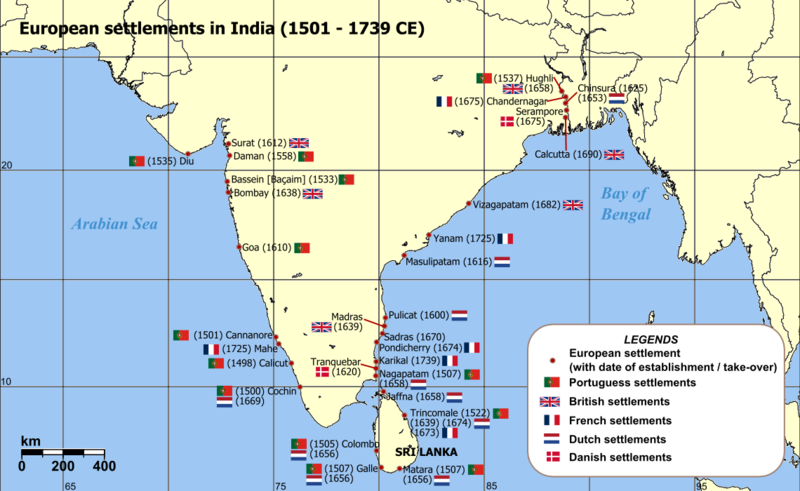
India was one of the largest and most important of the British colonies. It was colonised early by the British and was originally in the hands of English firms which organised trade with the colony, the most important of these was the powerful East India Company founded in 1600 and which established bases later in the 17th century at many of the sites which were to become major cities of India: Bombay, Calcutta, Madras. In these early days, Portuguese was an important language, being replaced in the following centuries by English with the missionary activity and the establishment of English educational institutions in India.
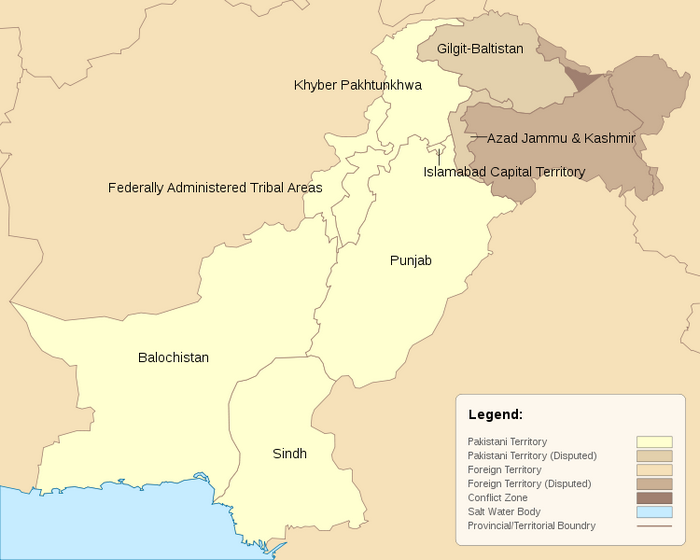
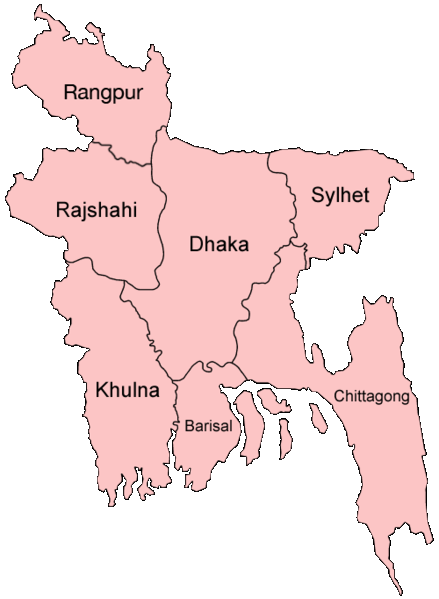
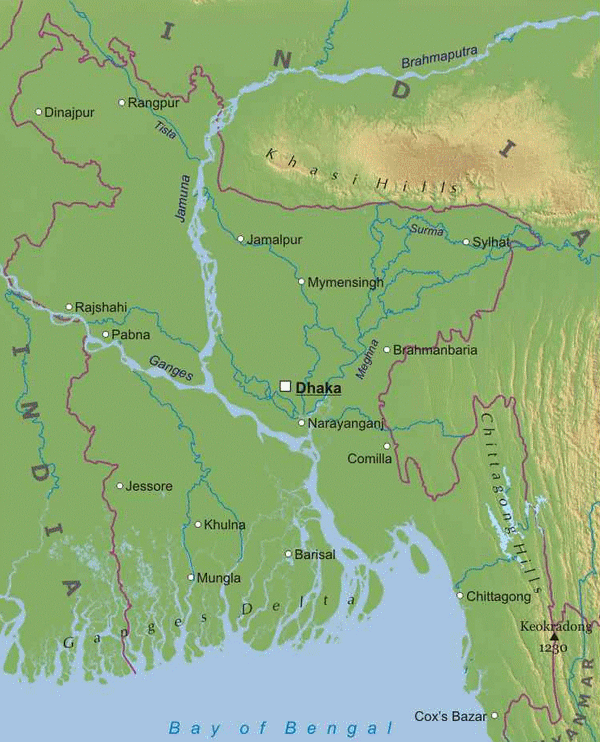
India gained its independence in 1947 which led to the hiving off of Pakistan as the Islamic section of the country. Pakistan itself was divided into West and East Pakistan (former East Bengal), the latter attaining its freedom from its larger western counterpart in 1971 and becoming the state of Bangladesh.
Because of the size and linguistic complexity of India, English has had a special function as a means of communication. This has been officially encoded in the three language formula, which was suggested for education: the state language, Hindi and English were to be taught to allow local identity, national feeling and international access respectively to be maintained.
Indian English in its different forms has quite distinctive features, above all in phonology. The alveolar consonants of English are realised as retroflex sounds - these segments are found in the linguistic area of India, i.e. in both Indo-Aryan and Dravidian parts of the country. Ambi-dental fricatives are realised as aspirated dental stops (much as in Irish English) and mid vowels tend not to be diphthongised, i.e. a word like though would be [ḏo:] rather than [ ðəʊ], tin would be [ṯɪn] and not [tɪn].
The grammar of Indian English varies greatly depending on the background indigenous language and the degree of proficiency of the individual speaker. Substrate influence makes itself felt in morphology and syntax, this interference declining sharply with education and fluency in English.
Pakistan
Bangladesh
Nepal
Sri Lanka
Literature on language in South Asia
.jpg)
.png)
.jpg)

Lange, Claudia and Robert Fuchs 2026. English in India. In Raymond Hickey (ed.) The New Cambridge History of the English Language, Vol. 6: Africa, Asia, Australasia and the Pacific. Cambridge: Cambridge University Press, pp. 35-64.
Shakir, Muhammad and Dagmar Deuber 2026. English in Pakistan. In Raymond Hickey (ed.) The New Cambridge History of the English Language, Vol. 6: Africa, Asia, Australasia and the Pacific. Cambridge: Cambridge University Press, pp. 65-94.
Bernaisch, Tobias 2026. Sri Lankan English. In Raymond Hickey (ed.) The New Cambridge History of the English Language, Vol. 6: Africa, Asia, Australasia and the Pacific. Cambridge: Cambridge University Press, pp. 95-120.
