The Pacific region
.gif)
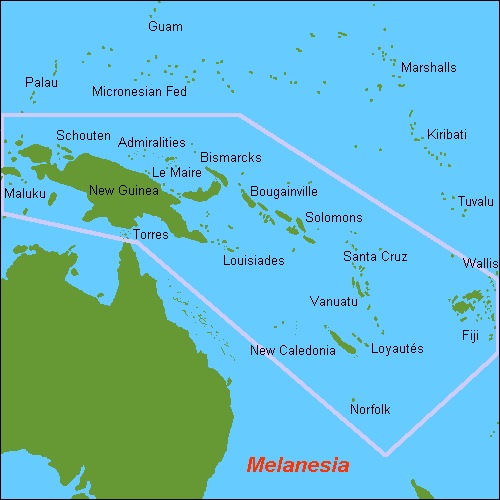
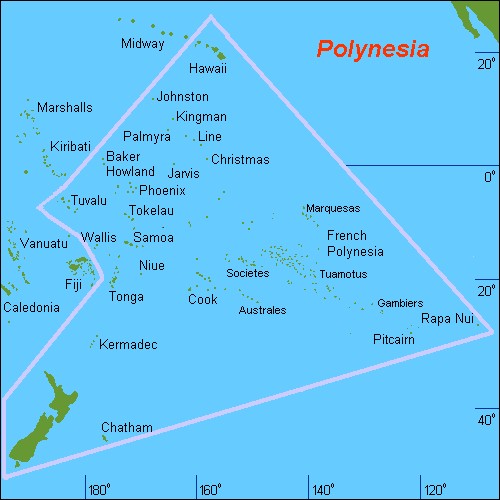
The term Polynesia (from Greek ‘many islands’) refers to most of the islands in the south-west and west of the Pacific stretching from the north of New Zealand up to Hawai‘i. By Melanesia (from Greek ‘black islands’, i.e. those inhabited by dark people) one refers to a smaller group in the south-west, which includes the large island group of Fiji.
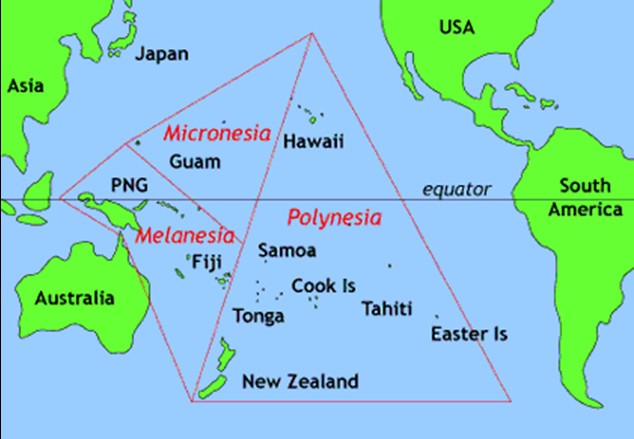
This is an area characterised by pidgins rather than forms of English with historical settler continuity as in Australia and New Zealand; for more information on pidgins, see dedicated section. The term Melanesian Pidgin English is often used to refer to the pidgins of the region but it is more a linguistic than a general term and refers to the pidgins and creoles spoken in Papua New Guinea (Tok Pisin), on the Solomon Islands (Pijin) and on Vanuatu (Bislama). It is arguable whether these are mutually comprehensible, particularly as they have been exposed to different European lexifier languages, e.g. French on Vanuatu and German to limited extent on Papua New Guinea. More important, however, is the difference in substrate input at the various locations.

Hawai‘i

The archipelago of Hawai‘i with its main island of Hawai‘i (the capital is Honolulu on the island of O‘ahu) has been the 50th state of the United States since 1959. The islands were first known as the Sandwich Islands after their discovery by James Cook in 1778. The dominant language is English and the influence of mainland American English is quite obvious. The influence of Hawai‘ian is restricted to a few lexical items. Before its annexation by Americans in 1898 the island was largely Hawai‘ian in population but today the number of speakers of the indigenous language is just a few percent.
The ethnic composition of the islands is now somewhat more complex due to immigration from the Philippines, Japan and China. The workers from these countries were responsible for the formation of Hawai‘ian Pidgin English on the plantations in the late 19th century in a similar fashion to the plantation pidgins and later creoles in other parts of the world, such as the southern United States and on various Anglophone Caribbean islands.
Fiji
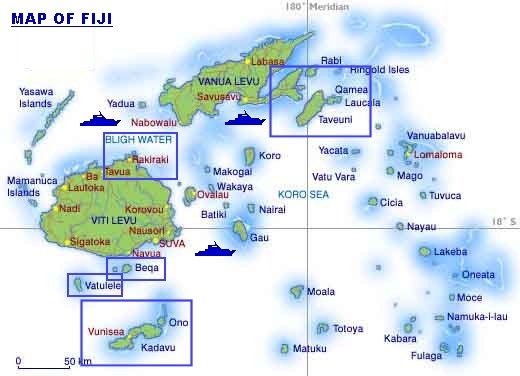

Fiji (to the east of Vanuatu) consists of approximately 300 islands. It experienced ethnic mixing as a result of the colonial presence in previous centuries. The British introduced English to the Fiji islands, but also transported South Asians (speakers of Hindi from India) to Fiji as labourers on the plantations. This led to continuing tension between South Asians and the native Fijians who are of original Melanesian stock. A pidgin developed on the plantations in the 19th century (partially through input of Melanesian Pidgin English speakers from other Pacific islands) but it failed to stabilise and has not been continued.
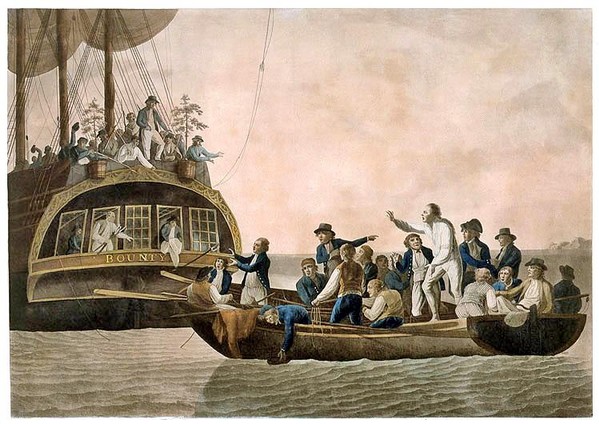
Pitcairn

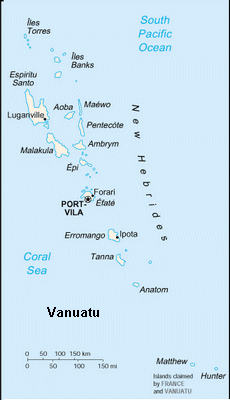
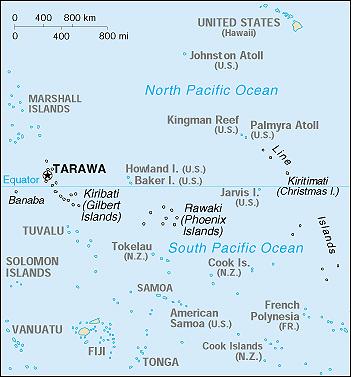
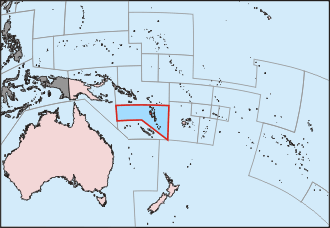
Vanuatu and Kiribati
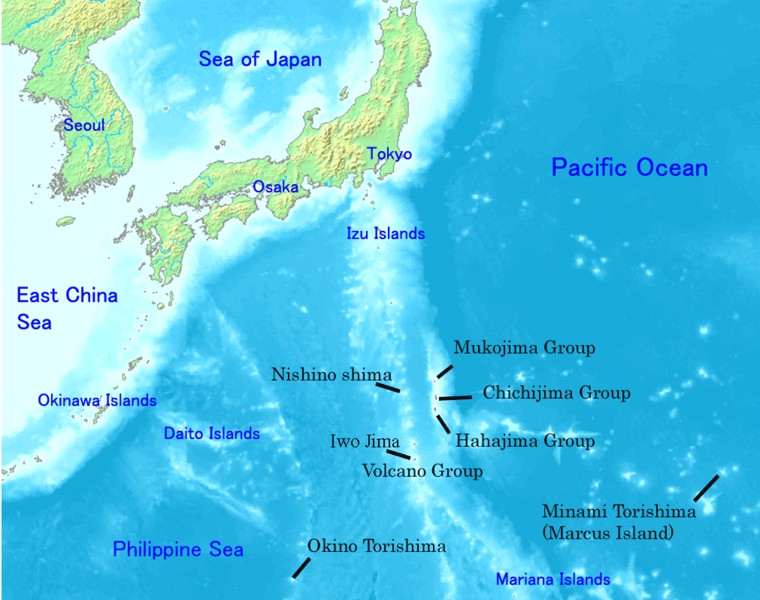
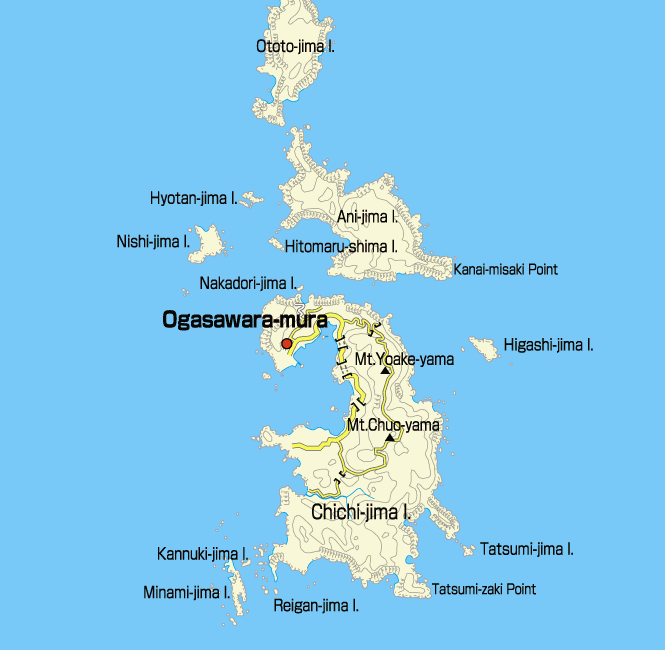
Ogasawara Islands (Japanese)
Biewer, Carolin 2026. English in the South Pacific. In Raymond Hickey (ed.) The New Cambridge History of the English Language, Vol. 6: Africa, Asia, Australasia and the Pacific. Cambridge: Cambridge University Press, pp. 523-548.
Britain, David and Kazuko Matsumoto 2026. English in Micronesia. In Raymond Hickey (ed.) The New Cambridge History of the English Language, Vol. 6: Africa, Asia, Australasia and the Pacific. Cambridge: Cambridge University Press, pp. 474-499.
Grama, James, Michelle Kamigaki-Baron and Katie Drager 2026. Pidgin and English in Hawai‘i. In Raymond Hickey (ed.) The New Cambridge History of the English Language, Vol. 6: Africa, Asia, Australasia and the Pacific. Cambridge: Cambridge University Press, pp. 443-473.
Volker, Craig Alan 2026. Melanesian Pidgin, Tok Pisin and English in Papua New Guinea. In Raymond Hickey (ed.) The New Cambridge History of the English Language, Vol. 6: Africa, Asia, Australasia and the Pacific. Cambridge: Cambridge University Press, pp. 500-523.