Linguistic features
Map of emigration route
Pasifika English
Literature

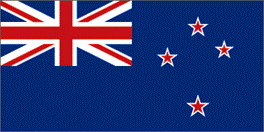
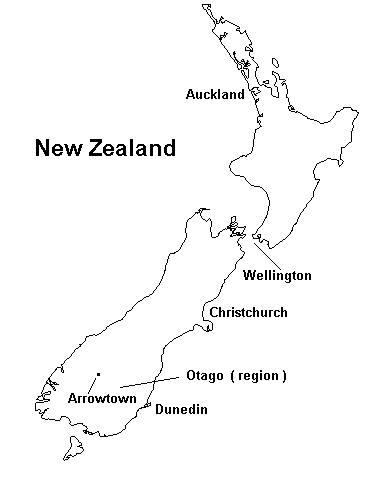

New Zealand had been discovered by various south sea peoples in the pre-colonial period (by Tahitians around 950 and by Polynesians in the 13th century). The first European to discover New Zealand was Tasman in 1642. James Cook took possession of the country for Britain in 1769. Not until 1840 did New Zealand formally become a British colony with the seat of administration in Auckland, later in Wellington. Within the framework of the Westminster Statutes New Zealand achieved more or less complete independence in 1928 and 1931.
New Zealand consists of two main islands, a northern island comprising of seven administrative districts and a southern island comprising of six such districts. It has an area of 268,670 sq km and a population of 3.2 m. The capital is Wellington, while the largest city is Auckland with 800,000. The official language is English; there are also native languages spoken by the Maori (native New Zealanders) who represent less than 8% of the population of present-day New Zealand.

Linguistic features
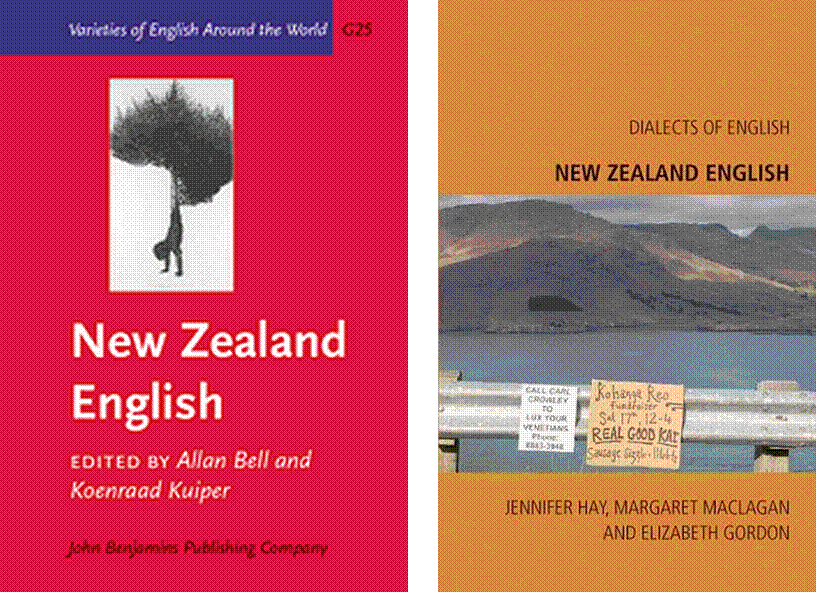
Basically similar to Australian English. New Zealand has Maori loanwords which are obviously not found in Australian English, e.g. tamarillo for tomato. In the area of phonology one can note that front short vowels are raised considerably - even more than in Australian English - giving man /mɛn/, men /mɪn/ with a diphthongisation of /ɪ/: pin /pɪən/.
Map of routes taken for the transportation of settlers in the late 18th and 19th centuries

Pasifika English
New Zealand has some 250,000 people whose families immigrated from the South Pacific islands, making up seven percent of the New Zealand population. The majority of these people come from four main islands or groups: Samoa, Cook Islands, Tonga and Niue. The first generation immigrants are second language speakers of English, with their first languages being the Polynesian language of their country of origin. New Zealand born members of the community are often dominant in English rather than their community language. This leads to a complex situation of language contact which seems to be resulting in the emergence of a Pasifika ethnolect of New Zealand English in the younger members of these communities.
Literature on New Zealand English