The progress of English throughout one and a half millennia has not been a straight line leading to the codified standard found in written English in England and in the pronunciation norm labelled Received Pronunciation (see Wright (ed., 2020) for more recent views on the emergence of standard English). Various authors have sought to find suitable metaphors to describe this development as presumed by many scholars in the field. Watts (2011), in his assessment of standard English narratives, employed the metaphor of a funnel whose opening at the top represented the many forms of earlier English and the neck of the funnel standing for the reduction in variation and streamlining of varieties of English which led to the codification and establishment of a standard. Other authors, notably James and Lesley Milroy, were critical of standards of language and their relation to authority and power in nation states, see Milroy and Milroy (1999).
| The history and present-day forms of English can be viewed as a braided river. This consists of several intersecting streams which criss-cross over a landscape, sometimes growing in width and depth, sometimes diminishing, if not disappearing. Sometimes streams merge with others, sometimes they divide and go separate ways. Importantly, there is no main stream to which all others are subsidiaries. What all streams in a braided river have in common is that they move forward. In the case of languages and varieties of languages this happens as they move forward through time in the communities which speak them.
|

|
This website is closely linked to the New Cambridge History of the English Language (7 vols., Cambridge University Press, 2025/6) which, as a new history, aims at treating English inclusively, according varieties worldwide their rightful place among the many forms of English to be found today and in history. More information on the new history can be gleaned from the dedicated module (see node in tree on left).

The general approach for this website, as its companion website on varieties of English, involves a broadening of scope, seeing history as beginning in the deep past and continuing up to and including the present, that is, viewing history as a continuous dynamic process. It is also seen as having a considerable geographical spread, a consequence of British colonial expansion from approximately the early seventeenth to the late nineteenth centuries (Hickey ed., 2004; Tagliamonte 2013). Many overseas varieties arose out of English, Scottish and Irish inputs, either directly through settlers or, for English input, indirectly through exposure in the education system, and came in time to differ from those varieties transported during the early colonial period, that is, taking paths independent of their historical precursors.
The spread of English beyond Britain and Ireland began before the first anglophone settlements of North America with early British settlement in the south-east Caribbean and then later in Africa, Asia, Australasia and the Pacific (to varying extents and with varying interaction with native cultures and speech communities). Thus there are diverse trajectories which the English language embarked on with many different varieties resulting from these processes (see the related website Studying Varieties of English for more information). The inclusive approach to forms of English has been supported by the burgeoning field of varieties studies which has widened the focus of scholarly research on English, including its historical dimension, to well beyond standard British and American English today. This research focus is often subsumed under the label World Englishes, a sphere of active academic interest among linguists of many persuasions (Filppula, Klemola and Sharma, eds 2017; Schreier, Hundt and Schneider, eds 2020; Bolton, ed. 2025).

What’s in a name?
A variety of names have been used to refer to the country and language of interest here. The word Britannia is a Latin form which refers to the country where the Pritani lived and is derived from Greek Brettanoi which is what Ptolemy called the inhabitants of the island. Anglia is also a Latin reference to the land of the English.
The main name is, of course, English (Old English englisc) which refers to the language of the Germanic tribe from the area of Angeln in the north-east of present-day Schleswig-Holstein. The word originally had an /e/ as first sound which was an umlauted form of the /a/ of the tribe’s name, the Angeln (Old English Engle). The second term is Saxon, which derives from the Saxons, again a Germanic tribe, this time from the North Sea coastal area, which came to Britain as of the fifth century AD; the label Saxon fell into disuse fairly quickly.
The study of historical forms of English has had various names throughout its history. The modern labels are Old, Middle and Early Modern English. In the past decade or so it has become common to distinguish a Late Modern Period from 1800 onwards (see next paragraph). In the nineteenth century, when Old English studies began, then referred to as ‘philology’, it was common to call the language of the earliest period Anglo-Saxon. One finds this occasionally nowadays, e.g. in later editions of earlier books on the subject, such as those by Henry Sweet.
Traditional divisions of history
When historical linguistics, and more specifically the history of the English language, evolved as a discipline a standard periodisation was used with a tripartite division into Old, Middle and Early Modern English. However, the temporal distance that now exists between our present and the beginning of the Early Modern period has necessitated a further division. This gave rise to the Late Modern English period being posited, which basically covers the eighteenth and nineteenth centuries (perhaps also extending into the twentieth century and down to the present). This time span has become an active area of scholarly inquiry (see the section on Late Modern English) and has seen the publication of collections and monographs in recent years, see Kytö, Rydén and Smitterberg (eds., 2006), Tieken-Boon van Ostade (2009), Hickey (ed., 2010), Kytö and Smitterberg (eds., 2020).
| Old English (450-1100) |
| Middle English (1100-1500) |
| Early Modern English (1500-present) |
| — or — |
| Early Modern English (1500-1800) |
| Late Modern English (1800- present) |
New approaches
Moving away from issues of periodisation, one can see that other expansions have concentrated on approaches to data and novel methodologies rather than chronological segments of the history of English. From the New Cambridge History of the English Language one could mention the following chapters, written by scholars noted for their work on the topics treated there:
1) Historical sociolinguistics
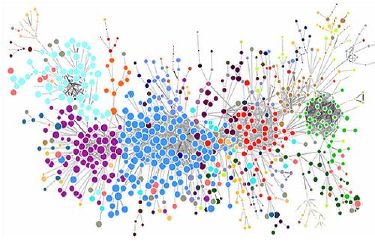
Nevalainen, Terttu and Tanja Säily 2025. Historical sociolinguistics. In Laura Wright and Raymond Hickey (eds) The New Cambridge History of the English Language, Vol. 1: Context, Contact and Development. Cambridge: Cambridge University Press, pp. 720-790.
2) Corpus linguistics

Bohmann, Axel and Lotte Sommerer 2025. Quantitative Methods and the History of English. In Merja Kytö and Erik Smitterberg (eds) The New Cambridge History of the English Language, Vol. 2: Documentation, Source of Data and Modelling. Cambridge: Cambridge University Press, pp. 665-693.
3) Historical pragmatics
.jpg)
Jucker, Andreas 2025. Historical pragmatics. In Laura Wright and Raymond Hickey (eds) The New Cambridge History of the English Language, Vol. 1: Context, Contact and Development. Cambridge: Cambridge University Press, pp. 666-719.
4) Grammaticalisation, construction grammar and cognitive approaches
.gif)
.jpg)
Bergs, Alexander 2025. Cognitive Approaches to the History of English. In Merja Kytö and Erik Smitterberg (eds) The New Cambridge History of the English Language, Vol. 2: Documentation, Source of Data and Modelling. Cambridge: Cambridge University Press, pp. 768-795.
Hilpert, Martin 2025. Construction Grammar and English Historical Linguistics. In Merja Kytö and Erik Smitterberg (eds) The New Cambridge History of the English Language, Vol. 2: Documentation, Source of Data and Modelling. Cambridge: Cambridge University Press, pp. 796-819.
Smith, Andrew D. M. 2025. Grammaticalisation. In Merja Kytö and Erik Smitterberg (eds) The New Cambridge History of the English Language, Vol. 2: Documentation, Source of Data and Modelling. Cambridge: Cambridge University Press, pp. 744-765.
5) Vernacular speech and orality
Moore, Colette 2025. Vernacular Speech in Writing. In Merja Kytö and Erik Smitterberg (eds) The New Cambridge History of the English Language, Vol. 2: Documentation, Source of Data and Modelling. Cambridge: Cambridge University Press, pp. 50-74.
Włodarczyk, Matylda 2025.· Orality in the History of English. In Merja Kytö and Erik Smitterberg (eds) The New Cambridge History of the English Language, Vol. 2: Documentation, Source of Data and Modelling. Cambridge: Cambridge University Press, pp. 75-100.
As the data from these approaches is distributed over longer periods of time a strict chronological division is not always appropriate. Indeed, the division by time period can be seen as a convenient tool for historical linguists rather than as a given from the sociocultural history of English.
6) Types of speech community, perception of features
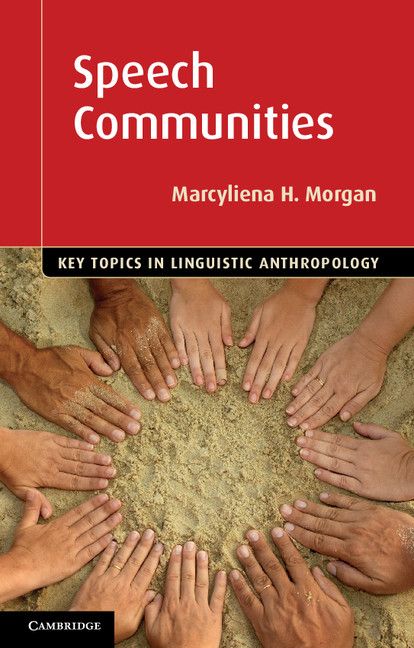
Dossena, Marina 2025. Networks, Coalitions and Language Change. In Joan C. Beal (ed.) The New Cambridge History of the English Language, Vol. 3: Transmission, Change or Ideology. Cambridge: Cambridge University Press, pp. 725-750.
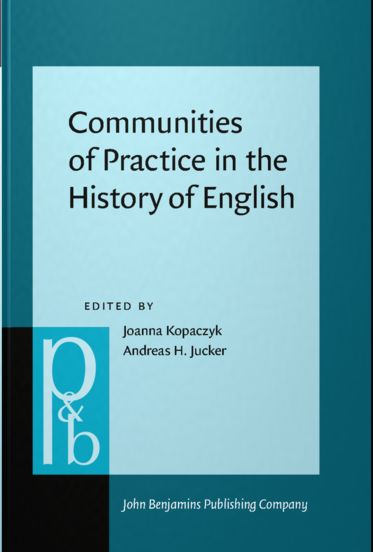
Kopaczyk-McPherson, Joanna and Andreas H. Jucker 2025. Communities of Practice in the History of English. In Joan C. Beal (ed.) The New Cambridge History of the English Language, Vol. 3: Transmission, Change or Ideology. Cambridge: Cambridge University Press, pp. 751-773.
Beal, Joan C. and Paul Cooper 2025. Indexicality, Enregisterment and the History of English. In Joan C. Beal (ed.) The New Cambridge History of the English Language, Vol. 3: Transmission, Change or Ideology. Cambridge: Cambridge University Press, pp. 774-800.
Language Variation and Change

The history of any language can be divided into external and internal history. The former aspect concerns the political and social developments in the community speaking the language while the latter involves the changes which take place over time within the language itself. Needless to say these two aspects are connected to each other but it is a one-way street: the external history can affect the internal one but not vice versa. For instance, the rise of bilingualism between the Scandinavians and the English in the north of the country in the ninth and tenth century had repercussions for the structure of English. However, one cannot say that an internal change such as the Long Vowel Shift in any way influenced external developments in England.
.jpg)
The focus of much research in English linguistics today, including historical studies, is informed by the research paradigm called ‘Language Variation and Change’. This approach concentrates on external aspects of language examines minute instances of variation, ultimately determined by social factors though possible through interaction with internal factors, to discern trajectories of language change.
PS: A word to students: websites do not replace books. They are intended to offer overviews and general information which students can use when beginning their study of a particular subject. When studying the history of English, a website is particularly useful because many maps and other visual material can be included in liberal amounts. But remember that for linguistic details and analyses there is no substitute for books, so make sure that you progress from here to the printed word.
Resources for teaching
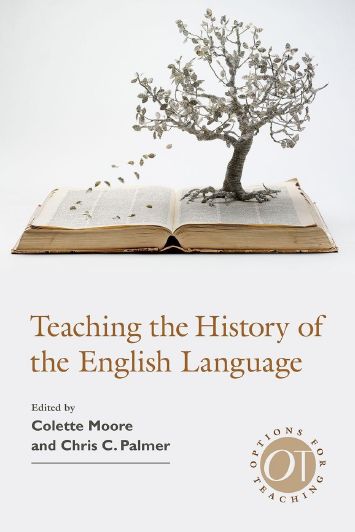
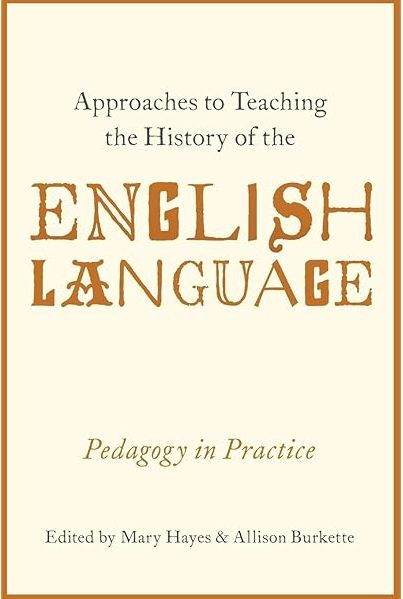
In universities around the world, the history of the English language is an established subject and there are publications catering for the needs of students. Two major publications in this field are Hayes and Burkett (eds, 2017) and Moore and Palmer (eds, 2019). Such works deal with a number of issues, central to the history of English, such as periodisation (see above), internal and external history, language variation over time, the process of standardisation and the rise of standard English with attendant prescriptivism as well as aspects of language change in general.

In recent years, the internet has had an impact on (i) the teaching of the history of English and (ii) on the ongoing history of the language itself. Whether and to what extent present-day language practices, in such areas as social media, texting and emails, will have a lasting effect on English is something which remains to be determined (see Crystal 2008). Our interaction with digital sources of languages is the subject of Tagg and Evans (2025).
There are several online resources for the history of English (apart from the present website). A good summary of these with discussions and links can be found in Ayumi (2025), a chapter in the current new history of English.
Miura, Ayumi 2025. Internet Resources for the History of English. In Joan C. Beal (ed.) The New Cambridge History of the English Language, Vol. 3: Transmission, Change or Ideology. Cambridge: Cambridge University Press, pp. 137-165.
Tagg, Caroline and Mel Evans 2025. Digital Interaction in the History of English. In Joan C. Beal (ed.) The New Cambridge History of the English Language, Vol. 3: Transmission, Change or Ideology. Cambridge: Cambridge University Press, pp. 107-136.
References
Beal, Joan C. 2004. English in Modern Times 1700-1945. London: Arnold.
Boberg, Charles 2025. Anglophone Settlement and the Creation of Canadian English In Natalie Schilling, Derek Denis and Raymond Hickey (ed.) The New Cambridge History of the English Language, Vol. 5: North America and the Caribbean. Cambridge: Cambridge University Press, pp. 473-501.
Bolton, Kingsley (eds) 2025. The Wiley Blackwell Encyclopedia of World Englishes. 6 vols. Malden, MA: Wiley Blackwell.
Brinton, Laurel and Alexander Bergs (eds) 2012. English Historical Linguistics. An International Handbook. 2 vols. Berlin: de Gruyter Mouton.
Crystal, David 2008. Txtng: The Gr8 Db8. Oxford: Oxford University Press.
Filppula Markku, Juhani Klemola and Devyani Sharma (eds.) 2017. The Oxford Handbook of World Englishes. Oxford: Oxford University Press.
Hayes, Mary and Alison Burkette Moore (eds) 2017. Approaches to the Teaching the History of the English Language. Pedagogy in Practice. Oxford: Oxford University Press .
Hickey, Raymond (ed.) 2004. Legacies of Colonial English. Studies in Transported Dialects. Cambridge: Cambridge University Press.
Hickey, Raymond (ed.) 2010. Eighteenth-Century English. Ideology and Change. Cambridge: University Press.
Hogg, Richard (general ed.) 1992-2001. The Cambridge History of the English Language. 6 vols. Cambridge: Cambridge University Press.
Kytö, Merja and Erik Smitterberg (eds.) 2020. Late Modern English: Novel Encounters. Amsterdam: John Benjamins.
Kytö, Merja, Mats Rydén and Erik Smitterberg (eds.) 2006. Nineteenth-Century English. Stability and Change. Cambridge: Cambridge University Press.
Milroy, James and Lesley Milroy 1999 [1985]. Authority in Language: Investigating Language Prescription and Standardisation. Second edition. London: Routledge.
Moore, Colette and Chris C. Palmer (eds) 2019. Teaching the History of the English Language. New York: The Modern Languages Association of America.
Schilling, Natalie 2025. The Dialectology of Anglo-American English In Natalie Schilling, Derek Denis and Raymond Hickey (ed.) The New Cambridge History of the English Language, Vol. 5: North America and the Caribbean. Cambridge: Cambridge University Press, pp. 64-94.
Schreier, Daniel, Marianne Hundt and Edgar W. Schneider (eds.) 2020. The Cambridge Handbook of World Englishes. Cambridge: Cambridge University Press.
Tagliamonte, Sali A. 2013. Roots of English. Exploring the History of Dialects. Cambridge: Cambridge University Press.
Tieken-Boon van Ostade, Ingrid 2009. An Introduction to Late Modern English. Edinburgh: University Press.
Watts, Richard 2011. Language Myths and the History of English. Oxford: Oxford University Press.
Wolfram, Wolf 2025. Language Change and the History of American English In Natalie Schilling, Derek Denis and Raymond Hickey (ed.) The New Cambridge History of the English Language, Vol. 5: North America and the Caribbean. Cambridge: Cambridge University Press, pp. 37-63.
Wright, Laura (ed.) 2020. The Multilingual Origins of Standard English. Berlin: de Gruyter Mouton.
Hernández-Campoy, Juan Manuel and Juan Camilo Conde-Silvestre (eds) 2012. The Handbook of Historical Sociolinguistics. Malden, MA: Wiley-Blackwell.
Nevalainen, Terttu and Helena Raumolin-Brunberg 2017. Historical Sociolinguistics. Language Change in Tudor and Stuart England. Second edition. Longman Linguistics Library. London: Routledge.
.gif)
.gif)